Wednesday, March 8, 2017

Response to Anti-Semitism: Protecting Ourselves, Protecting Each Other

This past week I was at a wonderful conference sponsored by Hadar with rabbis of multiple ideological perspectives from all over the country

During a particular session I was studying with two colleagues and one of them, who lives in the Philadelphia area, looked down at his phone and said, “Sorry - Gotta step out.”

He came back in and we asked is everything ok, and he said, the Jewish day school that my children go to just received a bomb threat.  All the children are waiting outside.  The leadership is trying to figure out what course of action to take next.


Vandalism at Mt. Carmel Cemetery In Philadelphia, PA, February, 2017

Over the next hours he filled us in on the outcome (everyone was ok), on what the leadership decided to share with the children (K through 5), on what procedures they followed.

This, as we know, is part of a much larger recent trend.

Thursday, February 23, 2017

The Perils and Power of Advice

It’s not easy to take advice from other people.  There are many reasons why we resist and many ways to resist.  Sometimes we doubt the motivation of the person giving the advice.  Sometimes we question whether the advice is sound altogether.


The Torah describes a moment where one person gives advice to another.  Not just any two people, but Yitro, Midianite priest and Moshe, leader of the Israelites and Yitro’s son-in-law.

You are overwhelming yourself and others by judging all of the people directly, Yitro tells his Moshe.  You need to delegate.  

Moshe follows the advice.  He delegates.  He handles the difficult cases and he appoints others to handle the simpler ones.  

The Torah records no vocal response on Moshe's part and doesn't externalize his thought process.

However, in keeping with our people’s long-standing interpretive impulse, I’m going to ask a few questions of my own about that which the Torah does not explicitly state.

Thursday, February 16, 2017

The Power of the People

Assuming we’re not “in the room where it happens.”  Assuming we are not serving in one of three branches of national government, assuming that we are not in a position that gives us access to the halls of power.  How do we face each day, take our temperature, assess ourselves and our surroundings, and determine what we want to say and do given national events?


The story of the Exodus describes the showdown between two main characters, leaders on the stage in the room where it happens, leaders whose actions have the capacity to impact entire nations.

Moses and Pharaoh have an extended showdown, a dance of ego, will and destiny that the Torah describes in dramatic detail.

But of course most of the people were neither Moses nor Pharaoh.  They were figuring out how to manage each day, how not to be literally and figuratively beaten.

Thursday, February 2, 2017

US Refugee Policy: Beyond Echo Chambers Toward a More Powerful Voice

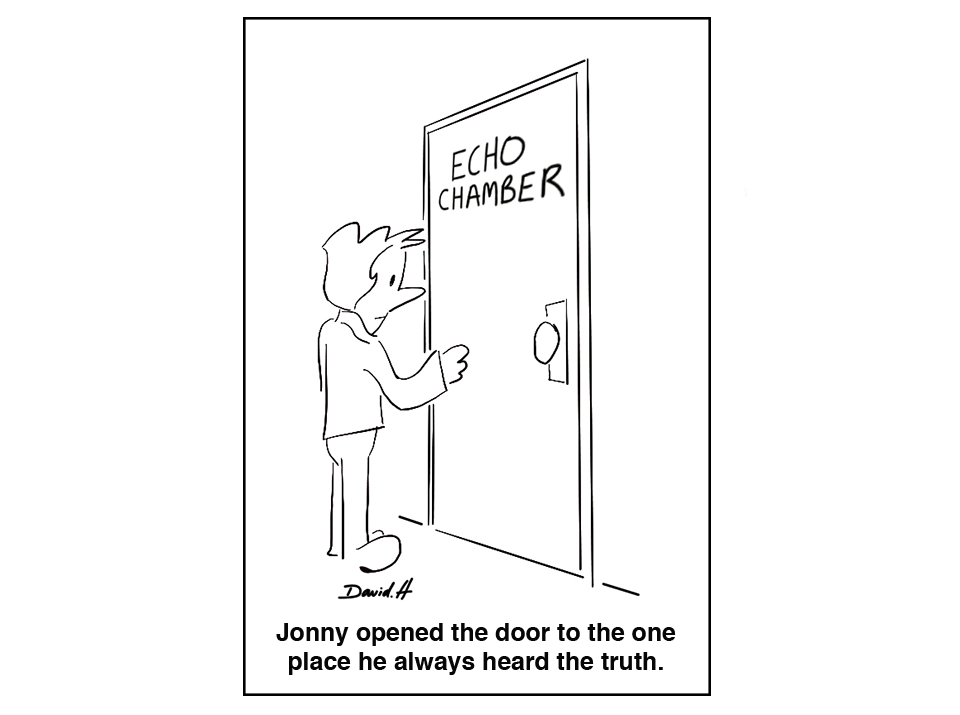
I'd like to discuss the recent US executive order regarding refugees but before I do, I want to reference two events I participated in recently within a span of several days.  The events reinforced for me the ideological diversity that exists in the Jewish community and the relative lack of fruitful exchange that occurs among people of diverse viewpoints.

I attended an informative briefing sponsored for NY rabbis by AIPAC to review the UN resolution and its implications.  

And I attended an impressive conference on Jewish-Muslim relations organized by the Hartman Institute.

Both programs allowed for questions and conversation.  And yet to me they felt at times like echo-chambers. 


The presenters at the AIPAC meeting gave a helpful, informative overview of the dynamics behind the recent UN resolution.  When they expressed criticism of the Obama administration’s approach to Israel they were not significantly challenged in that assessment.  I would argue that more challenge than what I witnessed will be helpful in yielding a deeper understanding of US-Israel relations past, present and future.

Those attending the Hartman conference were largely supportive of Jewish-Muslim dialogue and reinforced one another in their opposition to anti-Muslim rhetoric and policy. I was glad to see considerable efforts toward Jewish-Muslim dialogue continuing to bear fruit.  However, it will be helpful for the Jews and Muslims involved in dialogue to articulate challenges and disagreements more vociferously than what I witnessed.  (I did not see every session).

The AIPAC briefing and the Hartman conference both felt comfortable in their respective, relative homogeneities. However, moving forward in these two crucial realms (the Israel-US relationship and Jewish-Muslim relations) and others, it will be most effective, I believe, to deliberately create settings where diverse ideological perspectives and even profound disagreements can more comfortably be voiced and thoughtfully considered.

Thursday, January 12, 2017

Facing Our Anger

The English poet William Blake wrote a poem about the danger of allowing our anger to fester.  He called it “A Poison Tree”:

I was angry with my friend; 
I told my wrath, my wrath did end. 
I was angry with my foe: 
I told it not, my wrath did grow. 

And I waterd it in fears, 
Night & morning with my tears: 
And I sunned it with smiles, 
And with soft deceitful wiles. 

And it grew both day and night. 
Till it bore an apple bright. 
And my foe beheld it shine, 
And he knew that it was mine. 

And into my garden stole, 
When the night had veild the pole; 
In the morning glad I see; 
My foe outstretched beneath the tree.


In simple, child-like language, William Blake identifies the emotional fuel that keeps our anger going.  Fears, tears, smiles, wiles.  Our fear of this or that fuels our anger; our desapir fuels it; as time goes on we are happy to maintain it, it is comforting to be angry; we tell all sorts of stories to ourselves and others in order to keep it going.  And it grows and grows.  Until it is downright deadly.

I don’t have to give you a list of all of the conflicts we endure – in our families, in our community, in our nation, between nations – you can come up with plenty of examples.

Since anger is universal and so destructive, I think it’s worth giving thought to what fuels it and if its destructive nature is inevitable. 

Anger plays a significant role in the story of Joseph and his brothers, a magnificent mini-narrative within the larger Genesis saga.

Thursday, December 15, 2016

Remind Me Who I Am

It's important for us to remember who we are, as individuals and as a nation.  Not as simple as it sounds.  Gail Sheehy wrote a popular book called Passages in 1976 in which she outlined the challenges that people face at different stages of their lives.

I want to focus for a few moments on the 20’s.  Sheehy refers to the 20’s as the “trying 20’s” – I assume she intended the pun – the 20’s are a time in a person’s life for trying things out –relationships, professional paths – once people have gained some independence from their parents.  But the 20’s are also trying in the sense of difficult.

You look at people in their 20’s and they seem to be having an awesome time – they tend to look great, they are energetic, trying new things – big thumbs up – and in many respects they are having an awesome time.  But beneath the surface, there is often insecurity that comes form being “neither here nor there,” having left the structure of the home in which they grew up and not yet having settled into a home of their own creation.


It is really important for people at any stage in life to feel grounded – to feel connected to family and community – but it is especially important during this phase of a person's life.  Our three children are currently all in their 20's and I see how important it is first-hand.

In this phase of life a person needs to be reminded who he or she is fundamentally – what is the bedrock that I come from, and what is my potential.  The details – those can be worked out, even when painful – but the essential "who am I" needs to be conveyed by the people who care most. 

We don't know how old Jacob was when he left Beer Sheva on his way to Haran – escaping from his brother who wanted to kill him and heading off to find himself a spouse.

Who knows if he was actually in his 20's, but he was definitely in a trying phase of his life.  One has to imagine that he felt vulnerable all on his own, fearful of his brother's anger, possibly remorseful about his actions in the past, anxious of his prospects for the future.

Vayetze – he has left somewhere, but he surely hasn't arrived anywhere yet – and he won't settle for decades.

He is, emotionally, psychology, a representative of everyone who, at a certain point – is between the relative stability of the home we grew up in and the relative stability of the home we will establish.

If you've ever been in that place – you left home, maybe for university, maybe to seek out a professional opportunity, maybe to move a new land – and you have no idea where you will ultimately land – then you likely can relate to Jacob's situation.

Wednesday, December 7, 2016

Destiny Need Not Destroy Us

I’m currently watching an engaging series called “The Crown” on Neflix – about Queen Elizabeth II and the royal family.

Lots of intrigue as you might imagine – one source of intrigue is the relationship between Elizabeth and her sister Margaret.  As children, Elizabeth and Margaret knew that one day Elizabeth would become the Queen.  She was educated toward the task, groomed for it in many ways.

They have very different personalities – Elizabeth is reserved, circumspect; Margaret is dramatic, flashy, engaging.

One episode in particular underscores the tension in their adult relationship, with Elizabeth already having served several years as queen, Elizabeth resenting the freedom that Margaret has, Margaret resenting the position and prestige that Elizabeth has.


The element that I want to talk about is DESTINY - expectation writ large - how powerful that is especially in a family, how painful it can be and how it might be managed in the most healthy and productive way.