I'd like to discuss the recent US executive order regarding refugees but before I do, I want to reference two events I participated in recently within a span of several days. The events reinforced for me the ideological diversity that exists in the Jewish community and the relative lack of fruitful exchange that occurs among people of diverse viewpoints.
I attended an informative briefing sponsored for NY rabbis by AIPAC to review the UN resolution and its implications.
And I attended an impressive conference on Jewish-Muslim relations organized by the Hartman Institute.
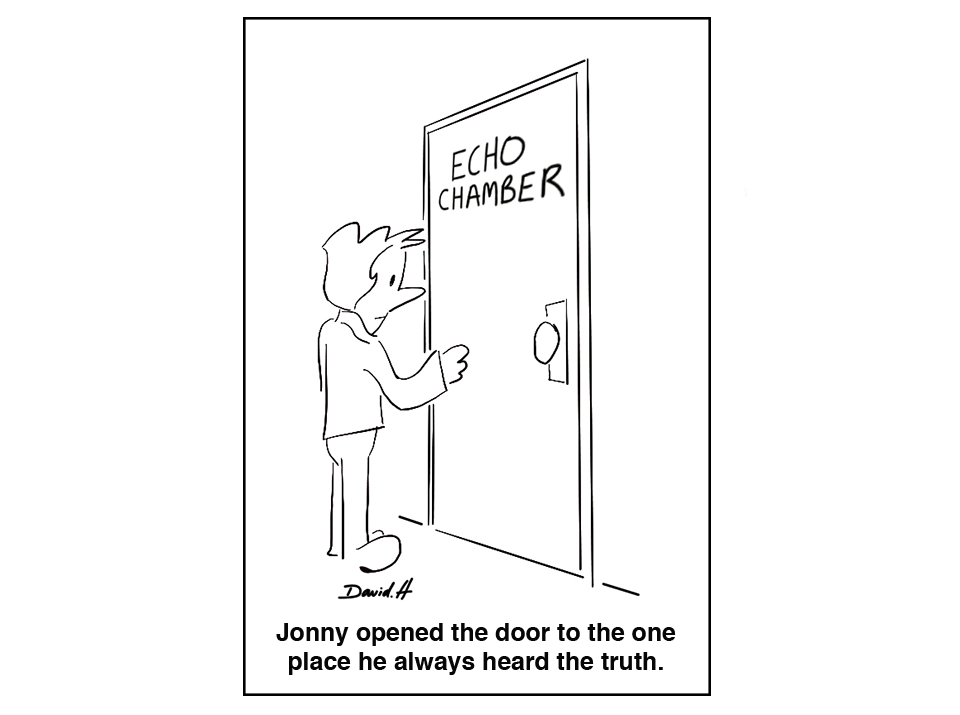
Both programs allowed for questions and conversation. And yet to me they felt at times like echo-chambers.

The presenters at the AIPAC meeting gave a helpful, informative overview of the dynamics behind the recent UN resolution. When they expressed criticism of the Obama administration’s approach to Israel they were not significantly challenged in that assessment. I would argue that more challenge than what I witnessed will be helpful in yielding a deeper understanding of US-Israel relations past, present and future.
Those attending the Hartman conference were largely supportive of Jewish-Muslim dialogue and reinforced one another in their opposition to anti-Muslim rhetoric and policy. I was glad to see considerable efforts toward Jewish-Muslim dialogue continuing to bear fruit. However, it will be helpful for the Jews and Muslims involved in dialogue to articulate challenges and disagreements more vociferously than what I witnessed. (I did not see every session).
The AIPAC briefing and the Hartman conference both felt comfortable in their respective, relative homogeneities. However, moving forward in these two crucial realms (the Israel-US relationship and Jewish-Muslim relations) and others, it will be most effective, I believe, to deliberately create settings where diverse ideological perspectives and even profound disagreements can more comfortably be voiced and thoughtfully considered.
I attended an informative briefing sponsored for NY rabbis by AIPAC to review the UN resolution and its implications.
And I attended an impressive conference on Jewish-Muslim relations organized by the Hartman Institute.
Both programs allowed for questions and conversation. And yet to me they felt at times like echo-chambers.
The presenters at the AIPAC meeting gave a helpful, informative overview of the dynamics behind the recent UN resolution. When they expressed criticism of the Obama administration’s approach to Israel they were not significantly challenged in that assessment. I would argue that more challenge than what I witnessed will be helpful in yielding a deeper understanding of US-Israel relations past, present and future.
Those attending the Hartman conference were largely supportive of Jewish-Muslim dialogue and reinforced one another in their opposition to anti-Muslim rhetoric and policy. I was glad to see considerable efforts toward Jewish-Muslim dialogue continuing to bear fruit. However, it will be helpful for the Jews and Muslims involved in dialogue to articulate challenges and disagreements more vociferously than what I witnessed. (I did not see every session).
The AIPAC briefing and the Hartman conference both felt comfortable in their respective, relative homogeneities. However, moving forward in these two crucial realms (the Israel-US relationship and Jewish-Muslim relations) and others, it will be most effective, I believe, to deliberately create settings where diverse ideological perspectives and even profound disagreements can more comfortably be voiced and thoughtfully considered.