Thursday, March 24, 2016

Rice and Beans for Jewish Unity - In Defense of All Jews Eating Kitniyot on Passover

This is the sermon in which I say, as senior rabbi of Temple Israel of Great Neck, in front of hundreds of people from multiple backgounds, that all Jews, from all backgrounds, who consider me as a rabbinic authority in their lives are permitted to consume rice, corn and legumes (kitniyot) on Passover.


This is the sermon in which I describe how the custom (followed by many Ashkenazi Jews) of not eating these foods on Passover evolved and how, according to Jewish law, those who have followed this custom are free to change their practice if they so choose.


I’ll get there shortly.  But first I want to say why I think this issue is important.  It’s not just about rice and beans.  Several of my colleagues in the Rabbinical Assembly, whose recent response on the matter I’ll describe in some detail, indicated that one of their considerations in permitting everyone to eat kitniyot was a lack of sufficient healthy eating options on Passover, especially for vegetarians.  Great reason.  The addition of foods that many have avoided provides for a healthier diet during this holiday. 


Another reason given is that the holiday is supposed to be about joy; it’s not supposed to be about self-denial.  Another great reason.  We shouldn’t be suffering on Passover.  It’s not Tisha b’Av.  It’s not even Yom Kippur.  It’s a time of joy. 


A third reason they gave has to do with expense.  Failure to consume rice, corn and legumes helps the cost of kosher for Passover foods to skyrocket.  The holiday is not meant to be a financial burden.  Yet another great reason.


But the reason that is most important, in my view, is that we should do everything we can to remove unnecessary barriers between people – not to eliminate differences, but to remove impediments to people being together, eating together and celebrating together. 


While this is a lofty universal goal, we should start by trying to remove barriers that separate Jews.


In past weeks we have witnessed numerous, intense public statements that aim to drive wedges between people of different faiths and people of the same faith.

Sunday, March 20, 2016

Trusting Ourselves to Find and Nurture Love

Recently my Waxman Youth House high school class invited two distinguished guests to speak with us.  Topic?  An honest look at marriage.  To prepare for our conversation, we took a look at Biblical stories about marriage to find positive and negative models.  We discussed what qualities we might look for in a romantic partner, and ultimately in a spouse.  And we spoke about what Judaism might teach us regarding what to look for and how to handle such a relationship overall.

I’ll tell about our guests and the conversation we had shortly.  (The photo below will hopefully tide you over until I do).


Drs. Ellen and Milton Rosen with Waxman High School Students

First, I want to reflect on the teachings of a rabbi who lived over half a century ago who had much to say on this topic, among others.  Rabbi Eliyahu Dessler was born in Europe, moved to England with his parents and was the leader of two famous yeshivot – one in northern England and, years later, another in B’nei Brak, Israel. 

He was part of the Mussar movement, following a tradition of rabbis who emphasized strict ethical behavior as a major element of the religious enterprise.  As a Rosh Yeshiva in England, he taught numerous students who were orphaned during the Holocaust and moved to England subsequently to rebuild shattered lives.

One of Dessler’s primary themes was the power of the יצר הרע yetzer hara, literally translated as the “evil inclination” – which has been understood to include pride and lustfulness.  He believed that a human being is constantly at war with his or her yetzer hara.

Among his prolific writings, he wrote a letter to two 17-year old students defending why a person cannot be trusted to choose a proper spouse and ought to leave that important task to someone else.  To leave it to someone else is to acknowledge the power of one’s yetzer hara and to embrace appropriate fear of God; to try to do it yourself, by contrast, is the height of folly and pride.

Rabbi Dessler wrote, “The simple truth is that when a man chooses a wife for himself he finds, once the first intoxication has worn off, that she is not at all as he thought and that he has made a great mistake.  Even those lustful people who go out whether their friends of the opposite sex day and night for years, and imagine that they have come to know them well, still know nothing of their character and nature; never once do they find after they are married that she is exactly the kind of person they thought she was.” 

And then he wrote the following to drive the point home to his young charges:  “Those who were truly wise…knew very well that no one can rely on his own judgment in these matters and they purposely arranged for other people to make the decision for them; for in a matter on which one cannot trust one’s own judgment one has to seek the advice of others, and if he doesn’t rely on them he will most certainly do the wrong thing.” (Strive for Truth, vol. 1, part 1, p. 213-14)

The essential issue here, as I see it, is the issue of trust.  In general, to what extent can human insight be trusted?  Specifically, for the present conversation, to what extent can we be trusted to make important decisions about the most essential aspects of our lives?

Sunday, March 6, 2016

Reflection is Not a Luxury

My colleague and friend, Rabbi Jonathan Spira Savett, got wide and well-deserved recognition for asking a question of one of the presidential candidates at a town hall meeting before the primary in New Hampshire. 

He asked Hillary Clinton how she balances confidence and humility as a leader.

Without getting into the substance of Clinton’s response, it is clear that she used the question as an opportunity for reflection.  She shared insights into the dynamics of leadership that she probably would not have shared, had she not been asked the question.

I want to discuss possibilities and ultimate value of being reflective about ourselves – not just in professional settings, but personally as well.  Without opportunities to reflect, we are far more likely to feel depleted and to suffer burnout.

I'd like to look at Moses’s life for insight into the dynamics of reflection and to suggest ways that a community ought to encourage helpful reflection for people of all ages with special emphasis on teenagers, who desperately need healthy opportunities to reflect.

Thursday, February 25, 2016

Learning from our "Sparring Partners"

One of the most moving tributes composed for the late Supreme Court Justice Antonin Scalia was written by Justice Ruth Bader Ginsburg.  By now it’s well-known that they were friends.  They socialized, went to the opera together – even road an elephant together while visiting India. 


As part of her tribute she wrote:


“From our years together at the D.C. Circuit, we were best buddies.  We disagreed now and then, but when I wrote for the Court and received a Scalia dissent, the opinion ultimately released was notably better than my initial circulation.”


When she was writing a landmark case in the area of gender equality in 1996, Scalia gave her an advanced copy of his dissent which enabled her to refine her arguments.  


She said that Scalia “nailed all the weak spots — the ‘applesauce’ and ‘argle bargle’ — and gave me just what I needed to strengthen the majority opinion.”


Rabbinic Judaism has a concept that I want to explore – it’s called בר פלוגתא bar p’lugta.  A bar plug’ta is like an intellectual sparring partner – so the Mishnaic sage Hillel was the bar pl’ugta for Shammai and vice versa.  The Talmudic sage Abaye was the bar pl’ugta for Rava, and vice versa.  


A bar p'lugta is someone who often has a different ideological perspective or orientation than you, but who you are in conversation with, and ongoing conversation leads you and your bar p'lugta to a sharper iteration of whatever the issues are.  Interestingly rabbinic texts point out that many of these pairs did actually socialize.  They didn't go to the opera together, but we are told that Hillel and Shammai ate together and married off their progeny to one another.


I see this concept in my parents’ generation more than in my generation.  In this synagogue, I see my parents’ generation far more willing to have vociferous debates across ideological lines and far more likely to have friends across the ideological spectrum.  There seem to be a bunch of reasons for this which can be the topic of another conversation.   


For now, I want to use myself as an example of how we might learn from people who see things differently than we do.  

Wednesday, February 17, 2016

The Crucial College Years

On Thursday, February 11, Temple Israel of Great Neck hosted Rabbi Julie Roth, Executive Director of the Center for Jewish Life (CJL) at Princeton University.  Given the many reasons why Jewish life on campus is important to understand as deeply as we can, I’d like to provide a summary of her comments in this forum for those who were unable to attend.


Rabbi Julie Roth speaking at Temple Israel

Rabbi Roth addressed four major issues as they've been approached on the Princeton campus:  BDS (Boycott, Divest and Sanction), Jewish pluralism, relations with other faiths and the mental health of college students.

During the past academic year, the Princeton CJL leadership opposed a divestment effort launched by a member of the faculty.  Rabbi Roth summarized the main developments, including the divestment proposal, the opposition of CJL to the proposal, the criticism leveled toward the opposition and the response of the CJL at various junctures.  Two main outcomes resulted.  The divestment proposal was ultimately defeated.  In addition, the CJL established a new student group called Tigers Together, described as "a coalition of Princetonians committed to promoting trust and partnership between Israelis and Palestinians by supporting projects that both build mutual trust and make immediate impact on the ground today. "

Rabbi Roth addressing a group of students at CJL

The CJL actively seeks to foster a spirit of pluralism among Jewish students, one which affirms and actively creates context for a wide diversity of religious observance.  In keeping with universal Hillel practice, religious services routinely include Reform, Conservative and Orthodox options.  Rabbi Roth shared a specific example about how the recitation of Friday night kiddush is conducted so as to accommodate a range of practices and beliefs.  

Rabbi Roth is involved with the Office of Religious Life, which oversees programming for individual religious groups and actively promotes opportunities for interfaith dialogue and engagement.  Among other interfaith initiatives, she and the Campus Imam recently led a group of Jewish and Muslim students on a trip to Spain.  She shared with us that while dialogue with Muslim students so far has largely avoided political discussions by design, she hopes that there will be constructive ways to include politics in the conversation moving forward.

Lastly, Rabbi Roth identified the increasing role that Hillel professionals at Princeton and elsewhere are playing in responding to students' mental health needs.  As she indicated, the college environment places significant stress on students as a result of academic and social pressures.  More and more, she and her colleagues recognize the importance of providing a comfortable space for students to unwind and to speak openly about issues of personal concern.  

We are well aware of the significance of the college years in helping to form identity, hone intellectual skills and establish patterns of behavior that will likely have lifelong implications.     For Jewish students, the college years provide an opportunity to broaden and deepen Jewish identity and commitment.  

Considering the many challenges that Jewish students face and the remarkable potential that exists, it is gratifying to know that Hillel professionals of the caliber of Rabbi Julie Roth are committed to their sacred task.

Originally written for the Temple Israel Voice, February 2016


Wednesday, February 10, 2016

Many Waze to Join the Story

I got back from a week in Israel a few days ago and I’m going to reflect on that but first I want to share something that happened to me a few weeks before I went.

Platform for Egalitarian Prayer at the Kotel

I had finished officiating at a funeral and got in my car to drive from the chapel to the cemetery ahead of the funeral procession.  While in the HOV lane of the Long Island Expressway, I saw the tire air pressure light go on and heard noises.  For no great reason I decided to ignore both indications until the noises grew significantly louder.  I then pulled all the way over to the shoulder, got out and realized one of my tires was completely shredded almost down to the rim. 

After I called the hearse driver, after the entire funeral procession pulled over so he could pick me up, after the sad burial, after I called AAA, after a very nice AAA guy came to replace the tire with the donut, after I called an auto shop in Great Neck, I plugged the address of the auto shop into Waze, the awesome GPS app pioneered by Israelis that tracks traffic, police activity and stalled vehicles and could probably also order you a felafel on the way.

As I prepared to leave the shoulder, the automated narrator on Waze said, in her characteristically measured tone, “stalled vehicle on the side of the road.”

I know this may sound strange to you, but I got a little nachas when I heard that.  I was like, “wow, that’s me!  I’m the stalled vehicle!”   I mean, I’ve always heard about other stalled vehicles but I’ve never actually BEEN the stalled vehicle.  She was talking about me, by golly.  I was a part of the story.

I hope you’ll forgive the somewhat unconventional introduction to my topic. 

Inflated or deflated, streamlined or sidelined, we want to feel like we’re part of the story.
        Minha with colleagues in a park opposite the Shalom Hartman Institute

For a Jewish person, the need to feel part of the Jewish story is larger than we tend to imagine and we often rush to critique people's motivations before we try to understand them.  

I’d like to share a few examples from my recent, brief time in Israel that illustrate the intense, creative approaches that Jews of a variety of backgrounds, with a variety of ideological perspectives, are using to help them feel authentically a part of the Jewish story.

First example.  I spent my time as part of a cohort of rabbis studying, praying, discussion, schmoozing at the Hartman Institute in Jerusalem, a creative, pluralistic organization seeking to transform Jewish life. 

Sunday, January 17, 2016

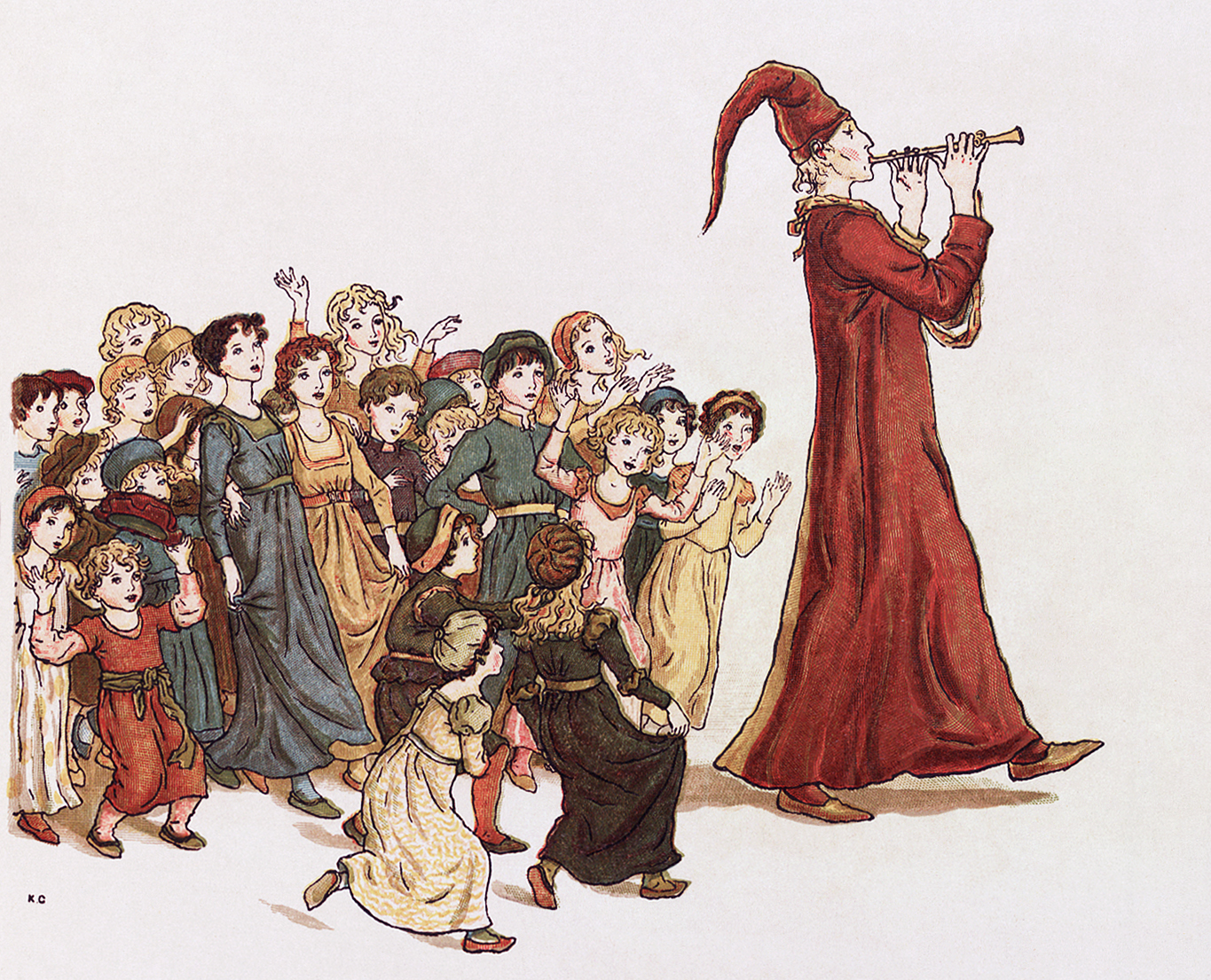
We Don't Need Pied Pipers

When schools or houses of worship are looking for someone to work with their children – teachers or principals, for example  - you’ll hear people say, “We want to find a pied piper.”  

What they usually mean by that is, someone charismatic who will inspire children.   When we think of the “pied piper,” we imagine someone playing a flute and all the children are mesmerized and following behind.


The actual story is quite a bit darker.  There are several versions of it that originate in medieval Germany but the gist of the story is that a man is hired by a village that is overrun by rats to get rid of the rats.  He starts to play the flute, all the rats are attracted and mesmerized by the sound of the music, they follow behind the man.  He leads them to a river where they all drown.


The mayor of the village doesn’t "pay the piper."  He reneges on the original agreement.  So the piper seeks revenge.  He plays a different tune on his flute which attracts all of the children, who line up behind him and skip along.  In one version he leads them to a cave, in another into a river, but they are never heard from again.


Charisma is a quality that we often associate with leadership and a quality that we like to see in our leaders whether they are working with adults or children – who wants a shleppy leader?   Appropriately channeled, it can be a positive part of successful leadership.  But charisma can be dangerous.  And I would argue that it should not be the primary quality we look for when we consider leadership.


Online and print media have been abuzz with discussion about Marc Gafni, a spiritual leader who first received Orthodox ordination and subsequently was ordained by the Renewal movement.