Saturday, December 21, 2019

Facing Antisemitism Forthrightly

My generation of rabbis - ordained in the 90’s - used to observe that our rabbinate would be different from those of previous generations.  Instead of focusing on the dangers of antisemitism, we would focus on the positive aspects of Judaism.  More joy, less oy.  I’m not sure who invented that phrase, but it expresses the sentiment that guided us.
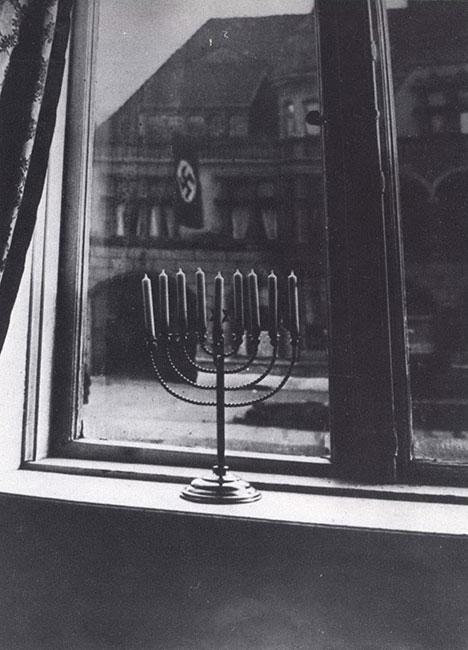


On a recent Wednesday night, I asked a group of people attending a Temple Israel Men’s Club event - do you feel more afraid or less afraid to be a Jew now than you did when you were growing up?  Some said they feel less afraid now and spoke about being bullied as Jews when they grew up.  But most said they feel more afraid now.

With antisemitic incidents on the rise, as empirically charted by the ADL and other organizations, and with the genuine fear that many of us continue to have, of course I, and other Jewish leaders, need to continue to respond, to analyze, to offer insight and hopefully some direction when it comes to antisemitism.  

In one week alone, 4 people were murdered in Jersey City by to people who were targeting Jews, 3 students were assaulted at Indiana University, and Netzach Synagogue was vandalized in Beverly Hills. 

Here are some points I’ve made before, but I believe they bear repeating and expanding:

Monday, December 16, 2019

Difficult Conversations Start With Us

I recently finished a book that I would recommend.  It’s called “Difficult Conversations,” written by Douglas Stone, Bruce Patton and Sheila Heen.  It’s about how to have difficult conversations in a way that is effective, that leads to understanding, rather than more frustration.


Delacroix, "Jacob Wrestling with the Angel"

Before I go on, I’d like to ask everyone here, children and adults - to think of a conversation that you are in the middle of, or one that you realize you need to have but haven’t started yet, that’s a difficult conversation.

Perhaps you have been, or need to be, talking to your child about a difficulty he or she is having socially in school.

Perhaps you have been, or need to be, talking to your parent about feeling anxious or depressed or, if your parent is older, about issues around independence.  

Perhaps you have been, or need to be, talking with a partner about something the other person does that bothers you, or about emotional or physical intimacy in your relationship.

Perhaps you have been, or need to be, talking with someone you supervise at work about how their performance has been problematic, or perhaps you need to talk to your supervisor about receiving greater responsibility and compensation.  

Take a minute to think about a difficult conversation in your own life.

Monday, November 25, 2019

Sensitivity Leads to Strength

Last Tuesday night I attended the IAJF (Iranian American Jewish Federation) annual gala where former UN Ambassador Nikki Haley spoke.  It is a source of pride to TIGN that so many of our members are involved, including IAJF president Robert Kahen, president of IAJF.


Last Thursday, I attended the ADL’s Never Is Now conference where, among other things, Sascha Baron Cohen was given the International Leadership Award and British Parliament Member Joan Ryan spoke about her response to antisemitism in England.  It is a source of pride to TIGN that so many of our members are involved, including, of course, CEO Jonathan Greenblatt.  

On Wednesday night, I went to see an outstanding new production of Macbeth with my son Zach.  The production was terrific and watching Macbeth again solidified for me how I would, in this little sermon, frame the week and, more broadly, the way that I believe we must respond to the enormous challenges that face us these days as Jews and as human beings.

We know it’s important to be strong in the face of antisemitism and bigotry.  No one could convincingly argue, post-Shoah, and recently in the aftermath of the shootings in Pittsburgh and Poway and continued attacks of Jews on Brooklyn and just recently a stabbing of a Jew in Rockland County, that Jews should sit back passively.  We need to be strong and we need allies to be strong on our behalf and we need to be strong on behalf of our allies.

We also need to remain sensitive.  So that we can continue to feel what is natural to feel when we and those we know and those we don’t know are targeted with discrimination and violence.  So that we have the resolve to fight to protect those who are vulnerable, including but not limited to ourselves.  So that we can sense the difference between protective measures that are called for and protective measures that unfairly target the most vulnerable.  

Strength and sensitivity are not mutually exclusive.  In Jewish tradition they never were.  They always went hand in hand.  The Kabbalists speak of chesed/love/sensitivity on one side of a cosmic and human scheme and gevurah/resolve/strength on the other side and the idea is that in the world, and through us, they work together.

Starting with Macbeth.

Tuesday, November 19, 2019

Becoming More Assertive

Starting this Monday night, I’m going to be teaching a class at Temple Israel about Musar.  Musar loosely translated means ethical behavior.  We will be looking at texts that answer the basic question, how should we behave?


A depiction of Abraham conversing with God


Broadly speaking, texts about “how to behave” go way back in our tradition.  The Torah explores human behavior in numerous stories about our forbears and concretizes expectations of behavior through laws. 

The book of Proverbs and the book of Ecclesiastes provide advice.

Medieval Jewish philosophers wrote about how to define proper behavior. 

During the 19th century, the so-called Musar Movement developed and musar instructors wrote and taught about how one might change one’s behavior for the better.

They established frameworks for self-reflection and behavior modification.  A recent framework, established by the Mussar Institute, offers the following guidelines:

In the morning, you identify a type of behavior that you want to embrace. 

You say it, think about it, meditate on it.

In the afternoon, you do activities that strengthen the behavior.

In the evening, you write about your efforts. What went well?What didn’t go well?

When it comes to improving our own behavior, lots of things get in the way.

Often we aren’t aware of how we’re behaving.  We say and do things that are angry or timid or selfish and we aren’t even aware.

When we look at other people who behave in positive ways, we might be intimidated by them.  If we get as far as saying, “Gee, I’d like to do that,” we don’t necessarily know how to go about it.

In this morning’s Torah reading alone, we see examples of behaviors we might want to follow (and perhaps some that we don’t want to follow).

I’d like to focus on one behavior of Abraham that I would say is a positive behavior, one that we might want to emulate.

Tuesday, November 5, 2019

Engaging With a Scary, Unjust World

We tell a lot of stories to children that are terrifying.  The Brothers Grimm - two German scholars - are best known for their fairy tales and they are quite scary.  But we don’t even need them as examples.  The Bible has plenty of scary stories.  


To be sure, when we tell the story of Noah, we focus on the cute little animals and there are even cute songs about them walking onto the ark which I’ll spare you.  But the overall story is terrifying.  Destruction by flood is terrifying and if children use their imaginations to consider what that would be like, it might keep them up at night.

There’s another scary aspect of the story, and that is, that God decides to give up on humanity.  And at least as scary as that is the fact that the human that God picks to be saved along with his immediate relatives says nothing and starts to build a big boat just like God commands in order to save himself, his family, and certain animals.

Giving up is one answer to the fact that human beings are various shades of imperfect/dismissive/downright cruel.  There are lots of ways to give up that don’t involve wholesale destruction, though we’ve certainly done that to one another as a species.  We give up by allowing injustice and violence to continue without saying or doing much.  Ignoring and denying are very common ways that human beings give up on one another.

The first thing Noah does when he leaves the ark after the flood is plant a vineyard and get drunk.  Usually we don’t teach children that part.  I imagine he gets drunk in part because it is too painful to face sober the reality of the destruction that occurred and the reality of his own complicity, his tacit agreement to “give up.”

There is an alternative to giving up. It occupies the rest of the Torah, such that the Noah story becomes the exception rather than the rule.  The alternative to giving up is engagement.

Wednesday, October 30, 2019

One Year After the Tree of Life Synagogue Shootings

I grew up in a town that had, and still has, a large Jewish community.  My public high school had a sizable Jewish population but was mostly Christian.  I imagine there were students of other faiths as well, though I wasn’t aware of it.  


Great Neck community prayer gathering following the shootings


I experienced so little antisemitism as a student that I distinctly remember the very few times it occurred. 

Now these were the 1970's and early 80's in Fair Lawn, NJ, a suburb half an hour west of the George Washington Bridge. Towns with fewer Jews, towns in different parts of the country, generally experienced more antisemitism. 

The 70’s and 80’s, when a significant number of us came of age in this country or were raising our own children, were what I’ll call a little gan eden, a little Garden of Eden.  Great Neck in the 70’s and 80’s must have felt like my childhood town, even more-so.  A more sizable Jewish majority, more Jewish influence, more of a feeling of stability.

As this morning’s Torah reading makes clear, the Garden of Eden didn’t last so long.  Was it meant to last longer?  From a literary perspective, I would point out that the story, in keeping with other origin stories, was likely was meant to be etiological, to explain to its readers why life was the way it was - why life was hard, why people had to struggle with constant disappointments, with human beings not only loving and creating, but also hating and destroying.  

And so a story was told about how the creator put us in a beautiful secure garden לעבדה ולשומרה l’ovdah ul’shomrah - to tend and to care for - and we messed up, resulting in our living in a world that is beautiful but also dangerous.  

No one who came to this country from Poland or Germany or Iraq or Iran or many other places believed this was a Garden of Eden for Jews because they understood, based on their experience, that there is no such thing.

But even for these individuals, and certainly for those who came of age here in the 70’s and 80’s, and for our children, it felt in general, and for Jews as well, that life was safe and secure.

One year ago, as we heard the news of the shootings at the Tree of Life Synagogue in Pittsburgh, whatever feeling of safety and security we might have had was shattered.  A sense of American Jewish life as being somehow protected was in a profound way threatened.

Thursday, October 10, 2019

Fear is Real - A Message for Yom Kippur

This past Sukkot, shortly after last Yom Kippur, a member of our family had a health-related issue that, thankfully, reached a positive resolution.  The experience, as you might imagine, caused a considerable amount of anxiety at the time.


There’s a well-known Jewish song which begins כל העולם כולו גשר צר מאד kol ha’olam kulo gesher tzar me’od.  The world is a very narrow bridge.  והעקר לא לפחד כלל Ve’ha'ikar lo l’fahed klal.  And the essential thing is not to be afraid at all.

The song is sung at Jewish summer camps and youth group gatherings and we often sing it here at Temple Israel

I’ve always liked the song, but at the same time, it always bothered me.  The essential thing is not to be afraid at all. 

Does that mean that if we or a loved one are facing a danger and we are afraid, we are somehow missing the mark?  Somehow not strong enough or brave enough?

The words of the song are attributed to a certain rabbi, Rabbi Nachman of Bratzlav.  I was intrigued by him years ago and decided to read a biography about him called Tormented Master, by Professor Art Green.  The title alone might tell you something, and I dove right in.

Rabbi Nachman, or Rav Nachman, was descended from the Baal Shem Tov, considered the founder of Hasidism, and Rav Nachman is credited with having revived Hasidism in a variety of important ways.  

He was known for being incredibly intense emotionally and apparently he was an extremely anxious person.  He thought things through to the point that he worried about them incessantly.  He had profound personal conflicts that lasted his entire life.

I imagine that when he wrote these words - the essential thing is not to be afraid - he was writing them as much for himself as for anyone else, kind of like when Dori, the fish in Finding Nemo, kept reminding herself to “just keep swimming.”

When you are worried about something, you know that the fear is real and cannot be denied or ignored.

If you have ever worried about the well-being of someone you love, or about your own well-being, you know that the fear is real.