Monday, July 3, 2017

Risking Discomfort in Order to Help

This was a tough week.  I want to reflect on two situations and three people who have stepped forward to act decently in ways that require some analysis and recognition.


The Israeli prime minister’s cabinet reneged on a deal designed to create a state-recognized egalitarian prayer section at the Kotel, the Western Wall.  Reform and Conservative leaders naturally have expressed outrage.  What I find especially heartening is that two Orthodox leaders, among others, have stepped forward to offer a critique of the cabinet’s actions.

Wednesday, June 28, 2017

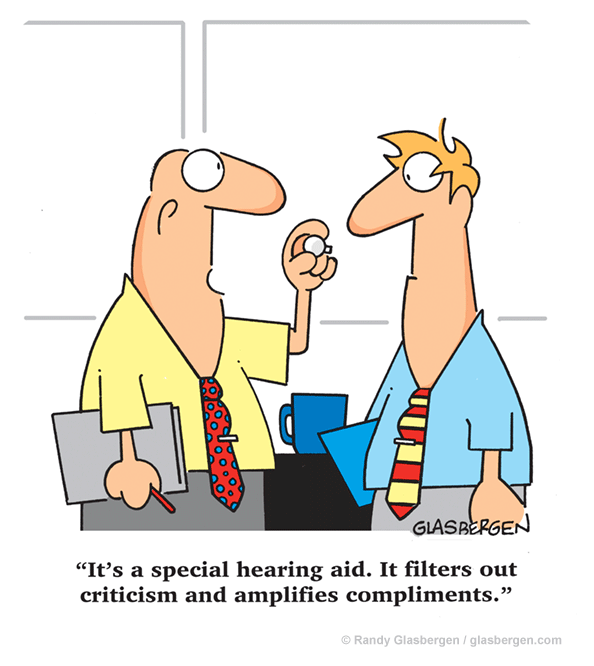
When We Are Criticized

A common question at job interviews is, How do you handle criticism?  

Possibly if we’re asked the question, we say something like, "Of course it's not easy to hear criticism, but I try to consider it carefully and to take a close look at what I can be doing better."

But the truth is that most of us hate to be criticized.  We get defensive.  We get offensive.
Our humble leader Moses was criticized all the time.  Poor fellow – he was criticized for a doing a job that he didn't even want.  God said, "Go tell Pharoah to let the people go" and Moses basically said, find someone else.

So I was thinking, Why not look at how he handles criticism and see what we can learn?

Wednesday, June 21, 2017

Why and How Rabbis Should Talk About Politics

Two weeks ago Rabbi David Wolpe published a piece in LA’s Jewish journal entitled,  “Why I Keep Politics off the Pulpit.”  

In the article he observes that rabbis are forever being pressured to take stands on political issues.  

He writes, “If it is a left-wing cause, I will be rebuked for neglecting prophetic ethics, which is the guardian of the widow and the orphan (and the climate and the transgendered). If it is a right-wing cause, I will be reminded of the primacy of peoplehood and objective moral law (and the sanctity of unborn life and the free market).”


And later, “I know outstanding rabbis on the left of the political spectrum and others on the right. You can love Torah and vote for Trump. You can love Torah and think Trump is a blot on the American system. What you may not do, if you are intellectually honest, is say that the Torah points in only one political direction.”

And finally, “All we hear all day long is politics. Can we not come to shul for something different, something deeper? I want to know what my rabbi thinks of Jacob and Rachel, not of Pence and Pelosi."

I want to share my thoughts about the question, should rabbis talk about politics from the pulpit.  Spoiler alert – my answer is yes.  But I want to clarify what I mean.  And I want to use Moses as a guidepost, since his leadership is central to the Torah and there’s a lot to learn from it.

Tuesday, June 13, 2017

What to Do With Our Resentments

We attended our son’s graduation earlier this week and there were many nice moments and some funny ones.  

De and I at one point were headed to a night-time program and we found ourselves surrounded by a group of students all walking to the same place.  

This was the second day of a three-day graduation and families of course had been gathered from all over to celebrate and to spend what my friend likes to call “quantity time” together.

One student turned to the other and asked, so how dysfunctional was YOUR family today?  

And then they proceeded to share stories.


At which point I thought – what if Zach were part of that conversation?  What, if anything, would he have to add?  And then I decided to stop thinking about that. 

At the end of our Torah portion Miriam and Aaron gang up on their little brother, Moses.  They criticize his choice of a spouse.  

And then they express their resentment at the preferential treatment that God gives him.  

הרק אך-במשה דבר ה׳ הלא גם בנו דבר Ha’akh rak b’moshe diber adonai halo gam banu diber – Did God just speak to Moses? Didn’t God also speak to us?

It is quite common for members of a family, specifically but not exclusively siblings, to resent one another.  

I thought it might be interesting to reflect a bit on how resentment works in a family and then to apply that to the Jewish community. After all, according to Adin Steinsalz, Jews are more than a religion, more than a people even – Jews are family.  

I promise this will end up being uplifting.

Tuesday, June 6, 2017

Expanding Our Offerings as a Jewish, Spiritual, Political Act

In Biblical times Shavuot marked the time that farmers in ancient Israel would begin to bring bikkurim, first fruits.  They were brought in special baskets, as part of a clearly defined ritual which included recitation of an encapsulated version of the history of the Israelites up to the moment of bringing the offering.


We spend much of Shavuot talking about the giving of the Torah, which is just fine.  But today I want to speak about bikkurim – first fruits, offerings.  Who brings, and how they bring, has implications for us today, implications that are political and spiritual, implications that tell us a great deal about how we should apply Torah to live.  

The ancient rabbis, in dealing with the bringing of these offerings, dealt with all kinds of situations.  What if the person bringing was a convert?  What if the person bringing didn’t know how to recite the history?  What if the person bringing was too poor to afford a nice basket?

Their responses to these situations were sometimes progressive even by today's standards and sometimes not so much.  But their willingness to consider enlarging the pool of those who brought offerings inspires me this morning to offer a public meditation on what we should be doing, for everyone’s benefit, to maximize the scope of who brings offerings and how, in multiple settings, from the most local to the most universal.

On Pesach we ask four questions.  On Shavuot I'd like to offer three recommendations.


Tuesday, May 23, 2017

Celebrating Jerusalem and Israel 50 Years Later

A few months ago a college friend who lives out of town sent me an email asking what we were planning to do as a synagogue to commemorate this upcoming Jerusalem Day, Yom Yerushalayim, 50 years since Israel's victory in the Six-Day War.  

I said, we're going to be having a concert in a local park, we're going to sing and celebrate. 


Yom Yerushalayim Concert, May 21, 2017, Great Neck, NY

He wrote back – interesting.  You know that there are rabbinic leaders that are struggling with whether or not they and their communities should celebrate.  

I knew what he was referring to.  Since1967 was also the beginning of the annexation of the West Bank, it also marks the beginning of the occupation.  So colleagues of mine, in light of that outcome of the Six-Day War, are ambivalent about celebrating Jerusalem Day.  Perhaps the day should be devoted more to solemn study and reflection, some are saying.

He wasn't expressing his opinion, he was giving me a sense of what he's been reading and observing.

Since I've known him for a long time, I decided I wasn't going to continue the conversation through emails.  So I picked up the phone and called him and I started to get excited.

Tuesday, May 9, 2017

Maybe the "Blind Person" is You or I

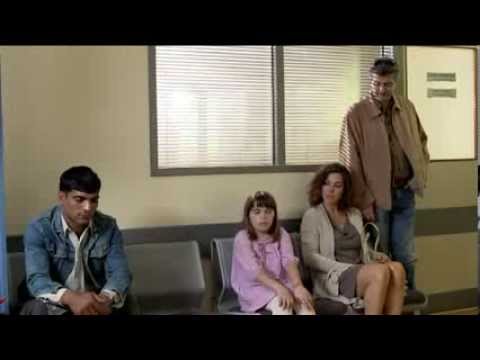
A Greek filmmaker named Nancy Spetsioti produced a powerful short film.  In the film a couple and their young daughter walk into a doctor’s waiting room.  They all sit down when the mother notices that the little girl just seated herself next to a young man with darker features than the family members have.  The mother switches seats with the girl.  The father gives his seat to the mother and stands nearby, leaving the seat next to the young man empty.  They look at at him suspiciously, he looks down awkwardly.

The family is told that the doctor is ready to see them and that he would also like the young man to come inside as well.  


Scene from "Jafar," directed by Nancy Spetsioti

The family walks in, followed by the young man.

The doctor happily observes that the little girl looks strong and well following her surgery.  And then he walks over to the young man, puts his arm around him, and says to the family, “Let me introduce you to Jafar.  He is Anna’s bone marrow donor.”

Jafar smiles gently, the family look at him and at one another.  The film ends.

I looked for reactions to the film on-line.  One person wrote, he must be a Muslim.  Another wrote, he’s Turkish, and a Greek family would consider him to be the enemy, untrustworthy.  

The film appears to have been created to call into question the assumptions that we make about one another before we know each other well, or even at all.  

I thought it would be worthwhile to explore the Jewish perspective on how we judge one another.  What do we assume when we see someone?  When we know, or think we know, something about the person's racial, cultural, ethnic identity and other aspects of his or her life?