Sunday, February 18, 2018

Thoughts and Prayers are Not Enough

When it comes to life and death, thoughts and prayers are not enough. 

While I was planning what I would say today, days after the deadly shootings at a Florida High School, I was eating lunch at home.  Lunch consisted of a leftover piece of sautéed wild salmon and a side of raw organic kale.  And I thought - this is a caricature of an east coast self-righteous liberal lunch.  And how sad is it that as a country we can’t seem to talk about anything without labeling each other politically in ways that stereotype and shut down the conversation.  You talk this way, eat that way, and we have very little to say to each other.
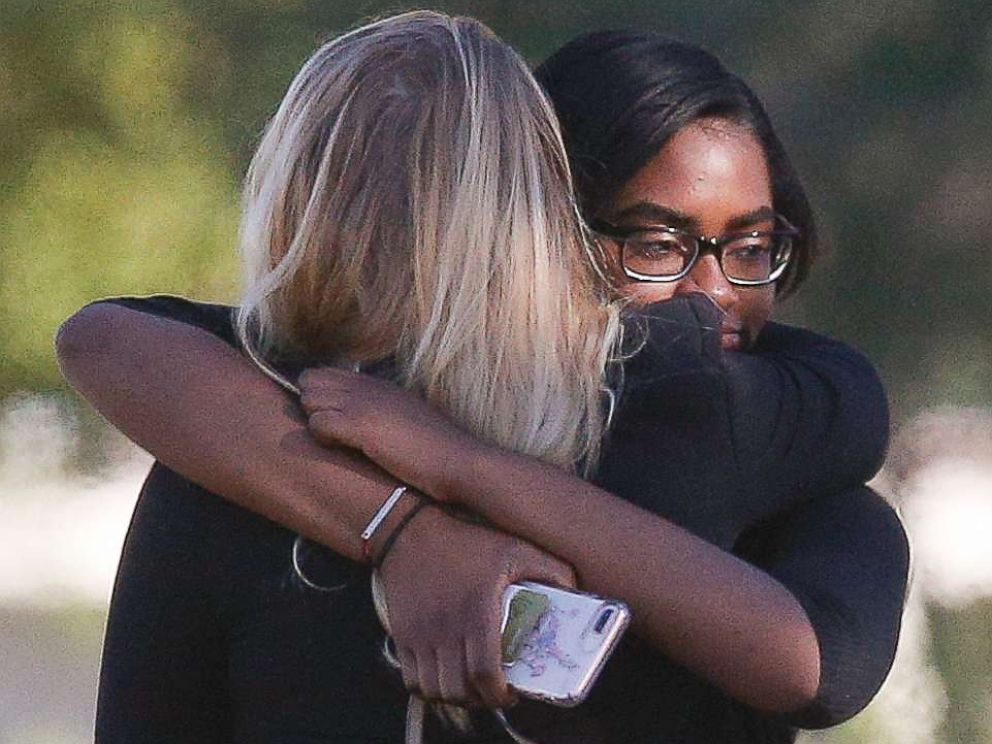


Two people embracing before the funeral of Alyssa Alhadeff, 14, a victim of the Parkland shootings

But I’m not standing here today to talk about lunch.

I’m standing here to talk about what we can all do, as Americans - left, right and center - to make sure that the horrible things that are happening in our country are less likely to continue happening.  

17 people in Parkland, Florida - students and teachers - don’t have the luxury any more of worrying what to have for lunch. They were gunned down by someone carrying a semi-automatic weapon.

Was he mentally unstable?  It appears so.  Was it hard for him to get hold of the weapon he used?  Not at all.

Tuesday, February 6, 2018

Listening is the Beginning of Redemption: A Week in Guatemala

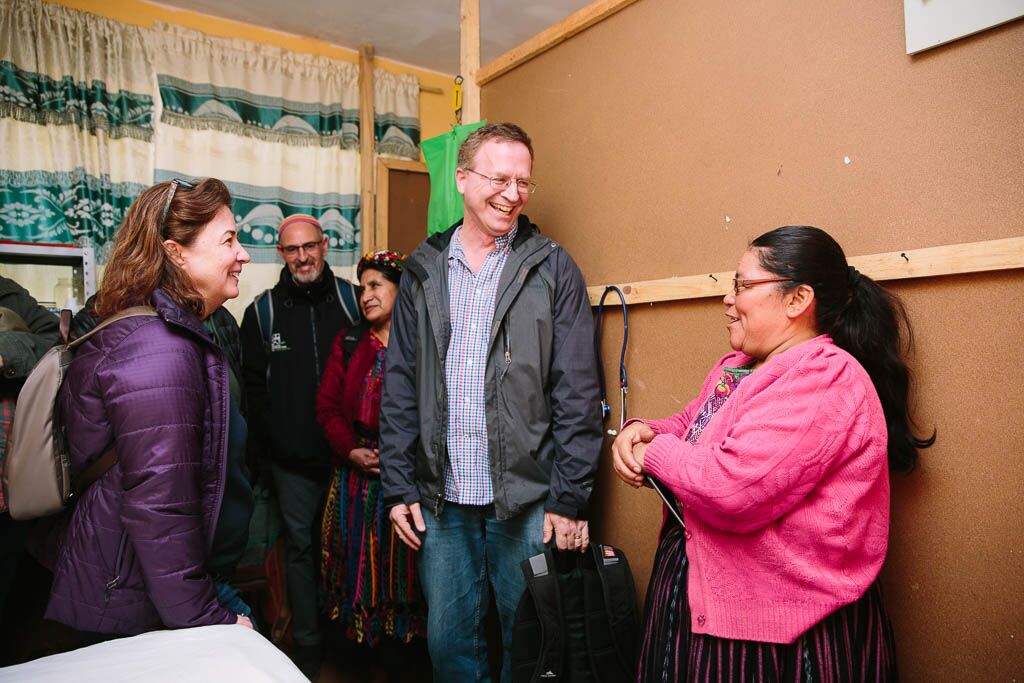
Last Sunday I flew home from a week-long trip to Guatemala with inspiring rabbinic colleagues and the wonderful staff of American Jewish World Service (AJWS).

We spent time in three cities - Guatemala City, Quetzaltenango and Antigua - meeting with leaders of organizations that AJWS supports.  Organizations that are fighting for women’s rights, for freedom of expression, for land rights.


I'd like to share some of my impressions from the trip and then to focus on what several people I met taught me about listening.

Thursday, January 25, 2018

Photos from My Recent Human Rights Trip to Guatemala

My colleagues and I recently returned from an extraordinary human rights trip to Guatemala led and sponsored by American Jewish World Service - AJWS. "How was your trip?" I've been asked numerous times since I returned. Just for a start: It was beautiful, troubling, uplifting, tragic and downright inspirational. 

Here is a video and some photos I took during the trip, along with brief narrations. The photos include journalists, midwives, healers and women's rights activists, as well as the intoxicating beauty of the land. More reflections to follow. 

When asked what gives him the strength to oppose injustice and to speak and write the truth at great personal risk, an independent community journalist invoked his Mayan heritage and said, "Our ancestors always taught us the importance of speaking the truth and fighting for what is right."

One of many moments that I felt a deep connection and a lump in my throat. 

So much courageous work being done. So much to support. So much more to do in Guatemala, the US, and throughout the world. 

For we, too, have ancestors who have taught us to speak the truth and to fight for what is right.


A member of Asociacion Nuevo Horizonte (New Horizons), created by Mayan Q'eqchies women to advance political participation for indigenous women in local, municipal and national leadership. She is speaking Q'eqchie and sharing her hope and advocacy for equal right for men and women, which she believes will be beneficial to all.


Each day began with a reflection with colleagues, all participants in AJWS's Global Justice Fellowship program.


Professionals and client from Bufete Juridicio de Derechos Humanos, a highly-respected legal organization which represents communities and individuals whose rights have been violated or condoned by the state. The case they shared with us pertained to the land rights of an indigenous community.


We toured the Casa de la Memoria, chronicling the often tragic history of Guatemala and dedicated to the memory of those who were killed from the Spanish conquest to the present.


On the way from Guatemala City to Quetzaltenango, a coffee break in a beautiful setting. 


A corn-husk wrapped tamale, part of a lunch graciously prepared by our hosts at CODECOT, a coordinating agency of traditional local midwives.


CODECOT participants presenting a skit to illustrate the limitations posed by local hospitals and the need for a strong midwife cohort to address women's health needs.


Rabbi Ilana Schachter presenting a plaque from AJWS to the CODECOT leadership for their efforts to promote sexual health and to address the institutionalized racism that many encounter in the healthcare system.

With Ruth W Messinger, President of American Jewish World Service (AJWS) from 1998 to July of 2016 and currently the organization’s inaugural Global Ambassador. Quite inspiring to travel with her and to witness her wisdom and experience in global justice.


Breathtaking scenery wherever we turned. Here's one of the nearly 40 volcanoes in Guatemala.


Members of the Pensa Comunitaria, a youth-led collective of independent journalists who cover social justice struggles in Guatemala as an alternative to mainstream media. They do not earn any money for their journalistic work. The woman speaking, for example, is also a dentist.


Getting to know wonderful colleagues from other communities was a real added benefit to the trip. It appears I traveled to Guatemala to spend time with LA colleague Rabbi Noah Farkas.


With one of the participants of Asociation Neuvo Horizonte who traveled seven hours (with her daughter) to speak to us. She shared two of the group's objectives: the establishment of a women's political party and women mayors for the towns in which the participants live.


We spent Shabbat at a coffee resort near Antigua, Guatemala.  The picture is taken from the inside of a pagoda where we held services. 


Sign spotted in the airport as we were preparing to leave, prompting an august rabbinic caption contest. Winner so far: travel tips.

Sunday, January 7, 2018

Choice and Responsibility Are Good Jewish Obsessions

David Grossman’s book, See Under Love, provides a powerful reflection on the impact of the Shoah.  It begins by telling the story of a child of survivors growing up in Israel in the 1950’s and quickly reveals that the child’s great uncle wrote children’s stories during the war.

Turns out that the great uncle wrote the stories at the request of a Nazi officer in the concentration camp in which he was imprisoned.  In a perverse, opposite take on the Scheherezade story, the officer promised that if the Jew told him stories, he would put him out of his misery.


It’s a complex, poignant book.  The author and the officer have a cat and mouse relationship characterized by mutual disdain.  

Among various issues raised as their relationship unfolds, the author speaks to the officer about responsibility and choice.  It’s the last thing the officer wants to hear; he thinks of these things as pesky Jewish obsessions.

The officer says that initially it was difficult for him to act violently.  He had to choose to pull the trigger, to inflict torture.  But eventually he got accustomed to killing and torturing and he no longer had to make the choice consciously.  He trained himself to “turn off a part of his heart” so that he could do his part to bring about the Third Reich.

The author insists in response that a human being is not a machine.  And he challenges the officer by saying, every time you act, you are making a choice.  

The Torah at the beginning of the Book of Exodus plunges us into a story about slavery.  ויעבידו מצרים את בני ישראל בפרך Vaya’avidu mitzrayim et benei yisrael b’farech.  "Egypt enslaved the children of Israel with hard labor." (Exodus 1:13)  Slavery by definition is an attempt to deprive people of choice.  

And yet the story immediately focuses on choices.  Choices that people make which require considerably bravery.

Tuesday, December 19, 2017

A Place for Private Light and Public Light

What do people think about wearing a kippa in public?

About lighting a Hanukkah menorah in the public square?


What do we feel about sharing our feelings for our loved ones publicly?

About doing acts of kindness, or advocating for justice, in public ways?

I suspect some of us think it’s a great idea to be public about all manner of observance and behavior, Jewish or general, and others think, not so much.  Or perhaps for most of us it depends on the issue at hand.

I want to reflect on the private/public dilemma of how we live our lives generally and how we navigate being Jewish.  What do we keep private?  What do we share publicly?

Monday, December 11, 2017

Joseph, Judah and Jerusalem: Confronting Intergenerational Baggage

When it comes to confronting deep-seated, challenging, multi-generational baggage, it helps to take small, thoughtful steps. How might this look in families and what it might mean for the recent announcement about Jerusalem?


Parents and children from "Hand in Hand" Center of Jewish-Arab Education in Israel

First, families.  I highly recommend a TV show about genealogy called Finding Your Roots.  The host, Henry Louis Gates, Jr., interviews several well-known people and presents them with research about their ancestors, often going back more than 10 generations.  The research includes ship records, census records and DNA.

The show is often fascinating.  It raises issues of race, ethnicity and socio-economics.  It raises questions about inherited traits, including personality.  Often the research reveals family secrets that were hidden for generations.  

The most recent episode featured the actor Gaby Hoffman, who starred in the Amazon TV series Transparent.

Gaby Hoffman was raised by her mother in the Chelsea Hotel in Manhattan.  Her father left when she was a young child.

Hoffman saw her father occasionally as a preteen and teenager. She generally found him distant, formal and a bit angry.

The episode focused on her father’s side of the family going way back generations.

Hoffman wondered - why the anger?  Why the distance?  

His father, it turns out - her grandfather - was angry and even abusive.  Hoffman said that she and her sister always wondered if there was some reason why these two generations of men were so angry and what situations might have occurred in previous generations.

As the research was revealed to her by the host, she discovered that one of her great-grandfathers was raised by a different man than his biological father.  

Hoffman’s comment when she discovered this was telling.  She said, I'm paraphrasing, all this stuff somehow lasts a lot of generations.  The animosity, the anger, the secrecy - it has a conscious and subconscious effect that lasts. 

Painful emotional realities often last from one generation to the next. Mistrustful, hostile relationships get replayed over and over with different actors from one generation to another.  They don’t magically disappear.  

Unless - says the rabbi channeling his inner Lorax - unless courageous, pragmatic, thoughtful steps are taken.

Sunday, November 26, 2017

Gratitude is a Choice

A few years ago I watched every episode of an excellent Israeli TV series about modern-Orthodox "30 - somethings" called S’rugim.  S’rugim refers to the kippa s’ruga, the crocheted kippa that, for many, has grown to serve as a symbol for this community.  

I thought it was a compelling show.  The characters were appealing but also at times frustratingly self-absorbed.


Deanna stopped watching after season 2 and I continued.  One night when I couldn’t sleep, I went downstairs and binge watched through to the end of the third and final season.

One of the main characters is named Hodaya.  

She grew up in an observant home, daughter of a rabbi.  Of all of the characters, she departs the most from her observant upbringing.  

She is also probably the least satisfied of all of her friends. She is brilliant, creative - perhaps in some ways the most gifted of all of her friends - and yet she never seems to be satisfied.

It first occurred to me this past week - as I was preparing to speak - the irony of her character given her name.

Her name - Hodaya - means gratitude in Hebrew. Thanksgiving, actually.  

And she appears almost constitutionally incapable of being thankful.

Many people will say that gratitude is a feeling.

To some degree it is.  But I want to suggest - on this Shabbat immediately following the American holiday of Thanksgiving - that gratitude is primarily a choice.  We choose to be grateful or not.  We choose to what extent we focus on saying “thank you” for the good things in our lives and to what extent we focus on everything that is wrong or tense or problematic in our lives.