Wednesday, June 17, 2015

The Secret to True Self-Esteem

My son just returned from a trip to Iceland with one of his best friends.

While he was there, he hiked all over, took in the nightlife in the capital city – it never really got dark, so it wasn’t technically nightlife – and he sent us pictures with captions like “most beautiful scenery I’ve ever seen.” 

When he got back, we schmoozed about the trip and he told us that when he and his friend were sitting in a restaurant, they looked around and had the following perception:

That they were the shortest, most plain-looking people in the restaurant.  Apparently the restaurant they were in drew a lot of native Icelanders.  According to my son, they were all well above 6 feet tall and looked like models for Nordic track. 

Whether or not he realized it at the time, he created an interesting modern version of the Torah’s story of the twelve scouts, which we read this morning.

The essential story is similar:  The land is beautiful beyond belief.  We, however, are inadequate.  The people are larger, stronger, nobler than we are.

My son and his friend felt this in a humorous way and I don’t think he was reflecting a deep sense of inadequacy.

But our ancestors who scouted out the land felt their inadequacy profoundly.  To be fair, they were not on a post-college jaunt.  They knew that they had to conquer this land, not just visit and take pictures, that their lives would be on the line.
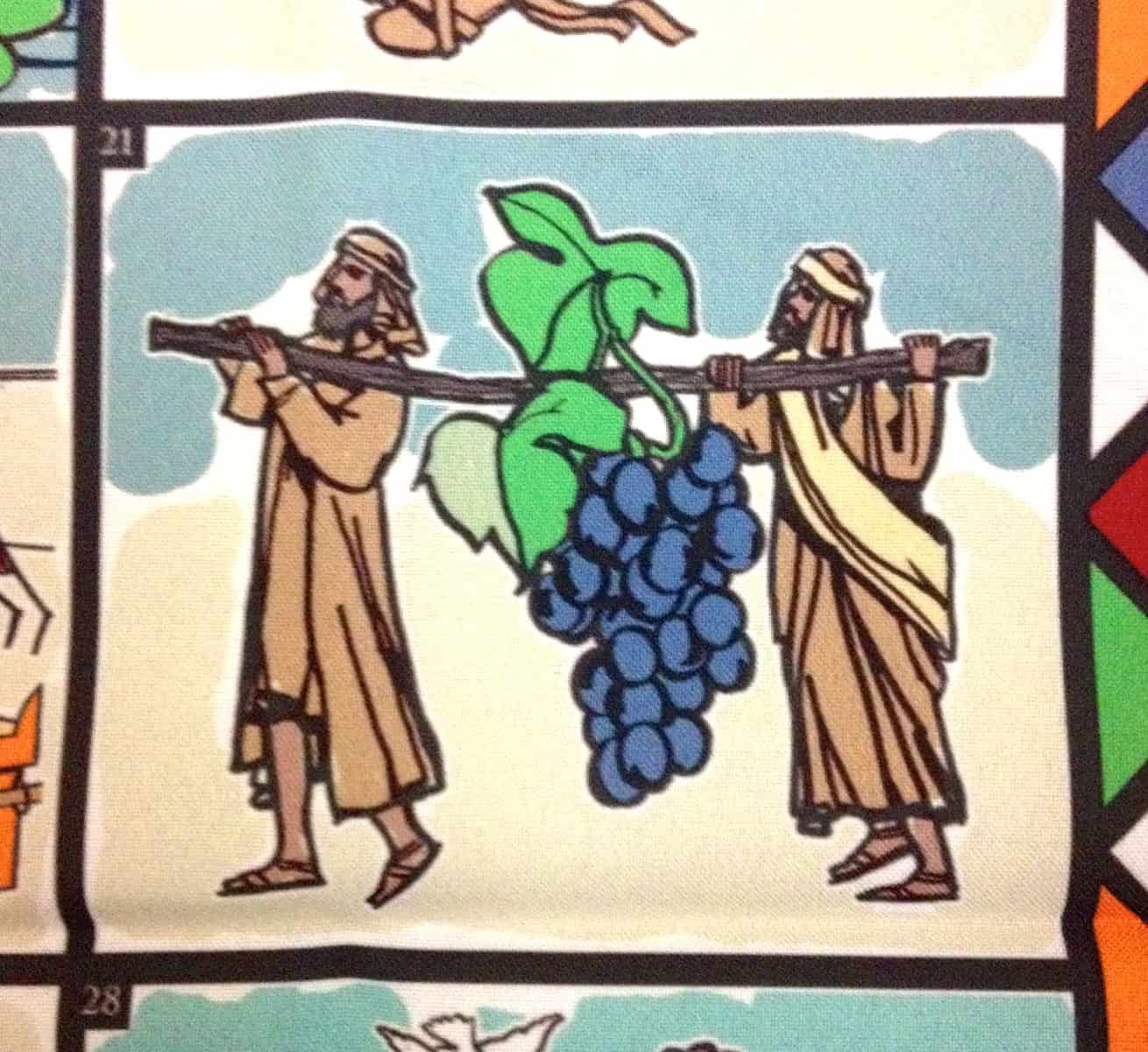


After considering my son’s story and the ancient story, it occurred to me that they present an opportunity to reflect on the notion of self-esteem.

Thursday, June 11, 2015

Let's Not Give Up on Prayer

I was in a hospital recently with a family whose loved one was nearing the end of his life.  The family asked that I say a prayer and I recited the prayer traditionally reserved for those moments.  The prayer begins with a request for refuah, for healing, but goes on to say, if this is the end, if healing is not to be, then take this person gently, lovingly.

One of the people who heard the prayer is a native Hebrew speaker and she noticed the sudden transition in the prayer – from requesting healing to requesting a gentle end to the person’s life. 

We talked about that a bit and then we all recited Shema Yisrael together, sensing that the neshama, the soul, of their loved one was already in a different place.

Experts in Jewish tradition and community-building lately have focused on the reality that prayer is hard for people to relate to for lots of reasons. 

They go on to say that there are many ways to engage Jews and we should be emphasizing those, which include Jewish learning, Jewish culture, social action.  Since prayer may not be compelling for people, we should be placing more emphasis on these other areas.

To which I say yes, but...

Thursday, June 4, 2015

Hunger and Desire the Jewish Way

I remember the years when our children were invited to their friends’ b’nei mitzvah.  We did a lot of carpooling in those years to get them to and from various receptions.  Every parent knows that if you just drive quietly, your children and their friends will sort of forget you’re there and they’ll talk pretty openly.

As the occasional chauffer I heard all sorts of things about friendships and crushes.  But the most entertaining part, I think, was when I’d drive them home from a celebration and hear a critique of the food at the party. 

I’m talking an all-out analysis of the cocktail hour that would make Ruth Reichl proud.

The sushi was better last week.

The franks in a blanket were room temperature – can you believe it?


Etc.

These conversations got me thinking about how, from an early age, we need to deal with desire and self-control.  Beyond that, they can raise questions about the way we think about abundance and scarcity.  A tiny percentage of the world’s population experiences cocktail hours.

This morning, I want to explore the overarching issue, not just as it pertains to food, and that is – what does Judaism teach us about how we relate to the physical world which includes how we eat and how we handle sexuality.

Wednesday, May 20, 2015

Investing in Our Brand of Judaism

When Deanna and I got married, her father suggested that we speak to his financial advisor about starting an investment portfolio.  We showed up with our modest savings and he recommended two mutual funds.  I followed their progress and noted, after a few years, that they weren’t doing so well.

I asked the advisor about them and he said, “Well, historically they’ve done well.”

And I said some version of, “I’m a very respectful student of history, but how does that help us now?”

And he said then, what he would say to us over and over again, you need to look at the long haul. 

At the time, I thought to myself, the phrase “you need to look at the long haul” must be his way of saying, “I messed up, but I can’t actually say that.”

But truly, over 25 years later, I’ve come to realize that he’s right.  Investments don’t necessarily pay off immediately, but that doesn’t mean you shouldn’t invest.  Careful, mindful investments generally do pay off in the end.

This morning, I want us to think about our investments – financial and spiritual – and the benefit they bring over the long haul.  Specifically, I want to talk about the importance of investing in the approach to Judaism that our synagogue represents.

For several months, we’ve been urging the congregation to vote for Mercaz, the organization that supports Masorti, or Conservative, Judaism in Israel.  The investment in a type of Judaism in Israel that is traditional yet open and fully egalitarian is crucial.  But we don’t always feel the importance of that investment, frankly, and we should.

Here’s a situation that will explain way we need to invest in Masorti Judaism:

For over two decades, the Masorti movement in Israel has sponsored a program to prepare children with special needs for bar and bat mitzvah. Participants have included children with cerebral palsy, Down Syndrome, ADHD, autism, blindness, hearing impairments and learning disabilities.


Each year, the Masorti movement partners with over 40 special education schools to bring appropriate bar/bat mitzvah training to over 300 children with special needs.  Whatever the physical, cognitive or emotional challenges, each child receives an aliya to the Torah.

This is the only program of its kind in Israel and it has drawn families from across the religious spectrum, including many Orthodox families. 

Let’s fast forward from the genesis of this program to recent events, April 2015.  The Masorti synagogue in Rehovot, a suburb of Tel Aviv, was planning a Shabbat morning b’nei mitzvah celebration in a Masorti synagogue for four children with autism. 

Thursday, April 23, 2015

Passover, Politics and the Jewish Obsession with History

I want to speak this morning about the value of history. 

Starting with very recent history.  Last week, the Rabbinical Assembly hosted a call with Dennis Ross about the agreement with Iran. 

He identified 4 areas that need to be emphasized in order for an agreement to be sufficiently satisfying to him:

1.    There needs to be one year minimum breakout period, defined as the time it would take Iran to finalize a nuclear weapon
2.    The international  need to be able to verify; all sites need to be accessible at all times
3.    There need to be severe consequences, that include the use of force, for lack of compliance.
4.    and it needs to be understood that severe consequences, which may include force, can be applied even after 15 years.

He pointed out that there has been mistrust between the US and various nations seeking nuclear power for as long as there’s been nuclear power, that this dynamic is hardly new.

During the Q and A, he was asked about the relationship between Obama and Netanyahu.  He said, it’s not ideal.  But let’s face it – there have been rough spots in relations between US and Israeli leaders throughout Israel’s existence.

He reflected, for example, on the relationship between Ronald Reagan and Menachem Begin which was hardly ideal.  Reagan thought that Begin was a bull in a china closet.  And Begin had reservations regarding Reagan’s mastery of the subtleties of international affairs. 

I’ve referred before to Yehuda Avner’s book, The Prime Ministers, which chronicles Yehuda Avner’s perspective from working in several Israeli administrations from Levi Eshkol to Menachem Begin.

Passover is the holiday which grounds us in historical perspective.  In ways that I will make explicit, and with implications that are political and personal, the Passover story takes us beyond the OMG of the moment and allows us to look at our lives against the backdrop of history and even eternity.

The present can be a very lonely and frightening place and the perspective that this holiday brings can give us insight and hope in multiple realms.

So here we go...

Monday, April 6, 2015

Keeping the Flame Burning Every Day: We Can't Respond Just When There's a Crisis

We get worked up when crises occur – a frustrating election in Israel, perhaps.  Or a series of anti-Semitic incidents in the community - and rightly so.  We should get worked up, we should try to assess the situation, we should speak out if necessary.

But I wonder, and I want to ask us all to consider, what happens the next day?  What happens on a regular day regarding matters that are important all the time, even when a particular crisis is not taking place

I'd like to talk about the day-to-day commitment that we need to have when it comes to matters that are truly important.  Not just what to do when underlying issues erupt in crisis, but what we must do, day after day, to respond to issues that cut to the heart of the kind of nation, the kind of community, we aspire to be.

Thursday, March 5, 2015

Kabbalah and Closeness: The Importance of Being Nearby

When I was in Israel recently with a cohort of rabbis, Dror Eshed, husband of Professor Melila Hellner-Eshed, died following a long illness.  I had never met him, though I have gotten to know his wife as one of our teachers, a passionate, brilliant expositor of Kabbalah.   At his funeral, she shared an insight that I want to bring to our congregation.

The Jewish mystical tradition maintains the notion that God’s energy and presence somehow flow into the world as a kind of emanation, the word for which is atzilut.  Dr. Hellner-Eshed pointed out that the Hebrew word contains the same root as the word etzel which means “next to” or “near.”  Some people, she said, associate spirituality with things that are remote and esoteric, thinking of it as a hidden force that we wait for to appear and flow into us.  But maybe the essence of spirituality, she suggested, is that it is near us and that often it flows from us, not just to us.  

She went on to describe how her husband inspired people by being near them and often by inviting them in.  He was an artist who had a studio near Jerusalem.  Frequently he worked with young people who came from disadvantaged homes, giving them opportunities to work in his studio and to gain the confidence that they had lacked.  Dror, she told us, brought atzilut to people because he was etzel, accessible, near them.